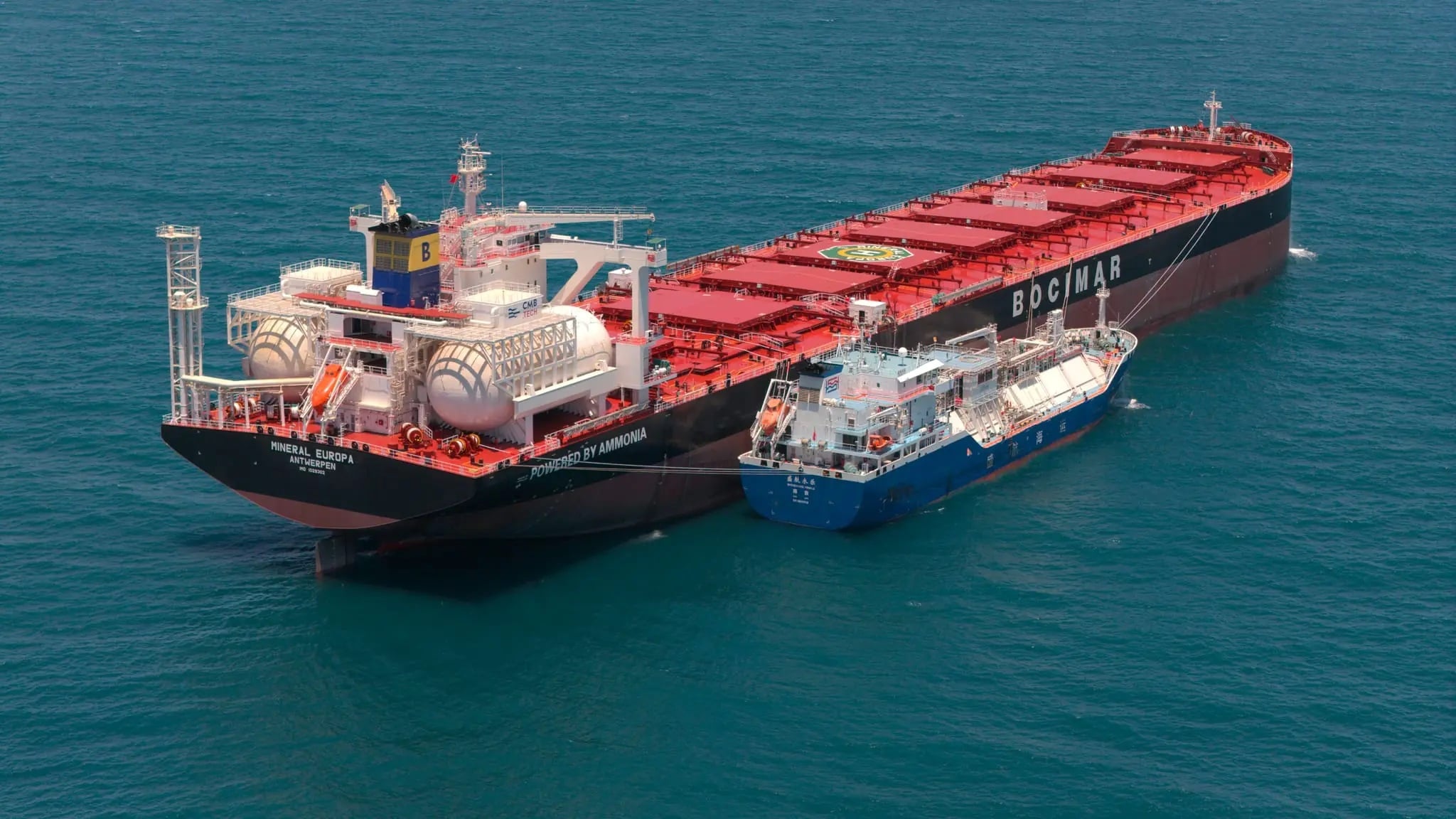
The Fortescue-chartered Capesize Mineral Europa has taken on green ammonia at Port Hedland, marking the first such bunkering operation in Australia and for the mining group's exports, The Maritime Executive reported. The 200,000 dwt dry bulk carrier is operated by Belgian shipowner CMB.Tech and serves the iron ore route between Port Hedland and China.
The vessel's deployment places the fuel initiative on a major bulk commodity corridor. According to the report, China accounts for two-thirds of global iron ore trade. Fortescue says the green ammonia supplied at Port Hedland produces no carbon emissions when used as marine fuel. Separately, port authority Pilbara Ports estimates that a switch to ammonia bunkering across the Australia-centred iron ore fleet could reduce annual CO2 emissions by up to 4.5 million tonnes. That estimate concerns a fleet-wide change, rather than the impact of this single bunkering operation.
The Maritime Executive also outlined potential ammonia supply developments in the Pilbara. Norwegian producer Yara already operates a large plant in the region that converts natural gas into conventional ammonia. That existing presence positions the company to introduce ammonia production incorporating carbon capture in future, the report said.
Another prospective supplier, WAH2 Clean Ammonia, wants to establish a blue ammonia plant nearby. Its proposed production route would use natural gas alongside carbon capture and storage. WAH2 has a natural gas feedstock agreement with Chevron and a bunkering partnership with bunker-vessel operator Oceania Marine Energy. The report describes the plant as an ambition, rather than an operating source of fuel.
Beyond marine fuel, Fortescue's longer-term objective is an iron trade with more processing undertaken before export. It envisages using hydrogen made from renewable sources to convert iron ore into sponge iron, also described as green iron. This deoxygenated material could then be used in China to manufacture high-grade steel.