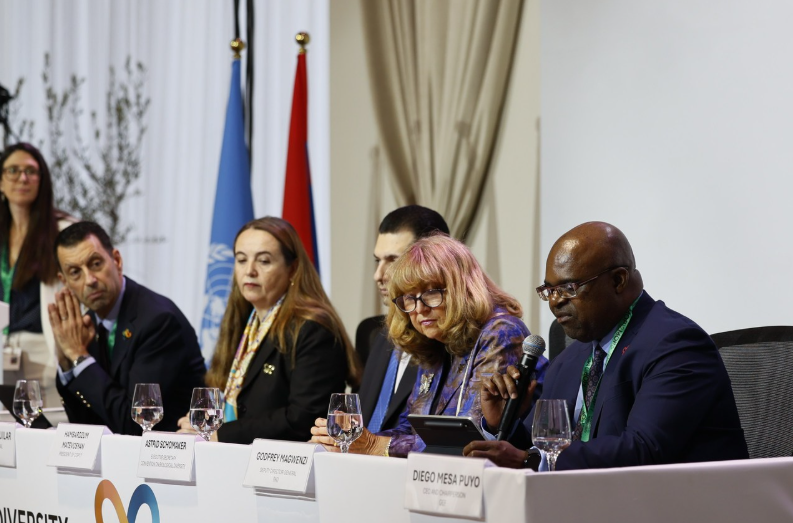
The UN Food and Agriculture Organization has urged countries to accelerate biodiversity measures across agrifood systems, warning that progress towards global commitments remains inadequate. According to FAO Newsroom, the collective progress review considered at COP17 in Yerevan identified implementation as the main challenge for meeting the Kunming-Montreal Global Biodiversity Framework’s 2030 goals.
Addressing the conference, FAO Deputy Director-General and Director of Cabinet Godfrey Magwenzi said strong national commitments needed to translate into faster delivery. He stressed the interdependence of biodiversity, food security and nutrition, arguing that changes to agrifood systems were essential to protecting biodiversity. The conference brought together representatives of the Convention on Biological Diversity’s 196 Parties and other stakeholders.
FAO’s analysis of 78 revised or updated national biodiversity plans and almost 13,000 actions found that agrifood systems feature across all 23 framework targets. Agrifood-related issues accounted for 63% of national targets and 36% of the actions examined. However, while 84% of plans identified financing needs, only 44% put figures against them, and just 19% provided costs for individual agrifood actions. Fewer than half of planned actions had measurable progress indicators.
FAO Newsroom reported that the organisation helped more than 65 countries update and implement biodiversity strategies in 2025. Work under its Agri-NBSAPs Support Initiative is under way or planned in 13 countries, mobilising about US$13.7 million. Separately, FAO-supported programmes and projects have enabled 91 countries to access more than US$645 million in Global Environment Facility grants and US$4.34 billion in co-financing.
New initiatives presented in Yerevan included a biodiversity monitoring hub intended to connect countries with technical expertise, technology and support for collecting and reporting data. Another hub will assist conservation measures outside formally protected areas, including productive landscapes and seascapes. FAO also presented an online tool for comparing national biodiversity and climate commitments, alongside guidance on making agriculture, fisheries, aquaculture and forestry more sustainable.
Updated voluntary land-use planning guidelines aim to help countries balance demands on land, soil and water with conservation, food security and climate resilience. During Food and Agriculture Day, Netherlands agriculture minister Jaimi van Essen announced a €1.5 million contribution to FAO’s biodiversity work, according to the outlet.