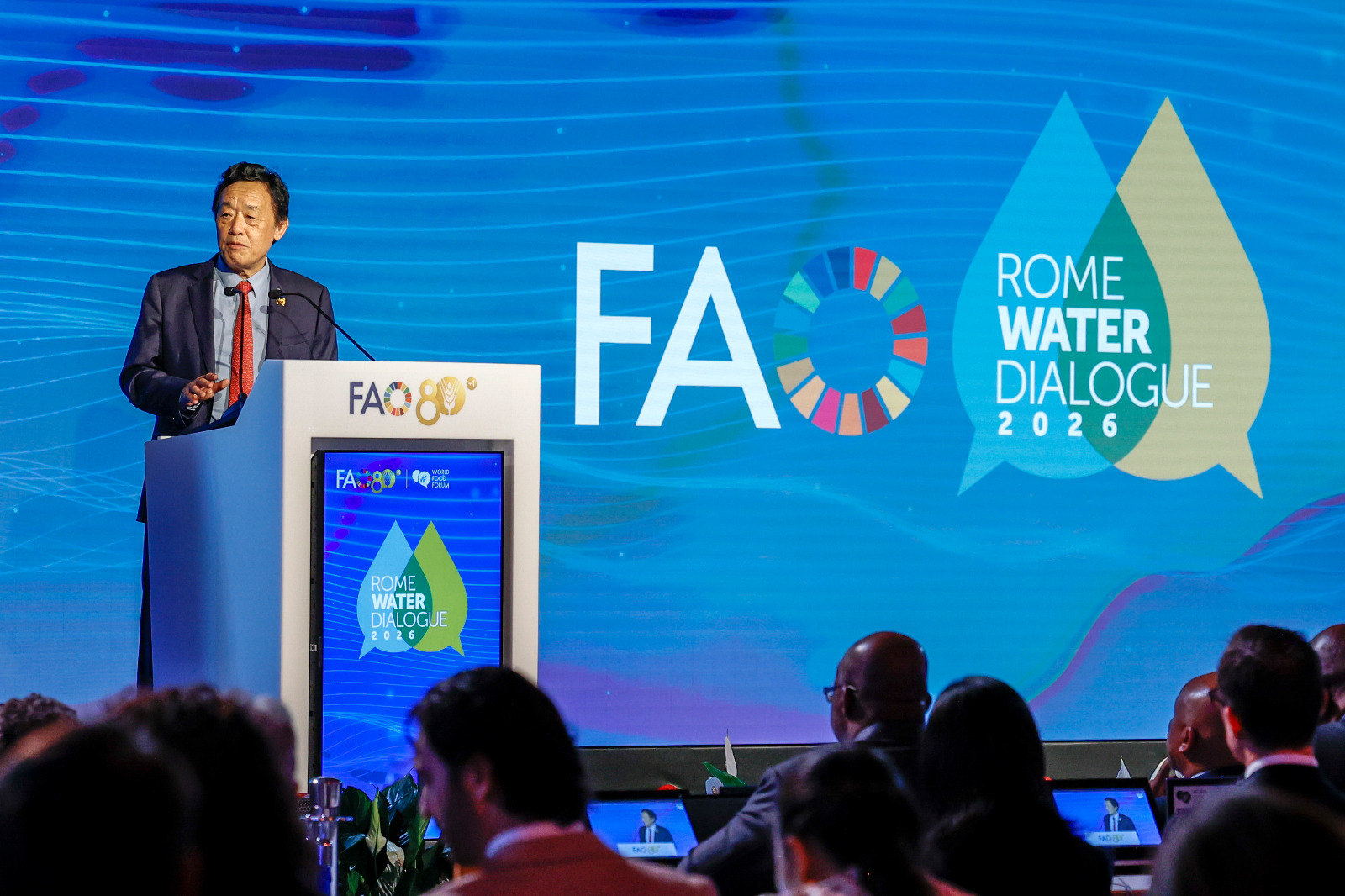
FAO has launched a digital tool to guide sustainable irrigation investment as Director-General QU Dongyu urged countries to improve water management to protect food security. Speaking at the Rome Water Dialogue 2026 during the World Food Forum, Qu called for greater efficiency, fairer access and agricultural practices that conserve and restore water resources, FAO Newsroom reported.
The Mapping of Irrigation Potential and Needs Initiative, known as IRMA, is designed to help countries determine where irrigation is practical, where demand is greatest and where investment could generate sustainable benefits. Its decision-support framework combines information on current irrigation, physical and biological suitability, development needs and anticipated benefits, allowing agricultural areas to be compared and prioritised.
According to FAO Newsroom, the platform can replace disconnected assessments with a more systematic planning process based on evidence. FAO said this could help governments match irrigation development to national priorities, improve co-operation between agricultural and water authorities, and limit financial and environmental risks. The launch accompanied a wider discussion of how countries price, allocate and manage water.
Qu pointed to recent El Niño events as evidence of how changing rainfall can rapidly bring drought or flooding, with losses of lives, livestock and crops. Such extremes increase pressure on limited supplies and competition between farming, communities, industry and ecosystems. He advocated reducing consumption, reusing and recycling water, and replenishing resources to improve agricultural output while easing its impact on water supplies.
His priorities combined innovation, dependable data and transparent accounting with fair access for small-scale producers, women, Indigenous Peoples and vulnerable communities. He also called for early warning and preventive risk management, alongside protection for forests, rivers, lakes, soils and other ecosystems that support agricultural production. These objectives needed to progress together rather than treating efficiency separately from inclusion and livelihoods.
The dialogue also considered pricing and incentives that encourage efficient use while protecting essential needs. FAO said it would continue assisting countries through water tenure assessments, water accounting and National Water Roadmaps, while building partnerships across governments, farming, research, civil society, finance and business.