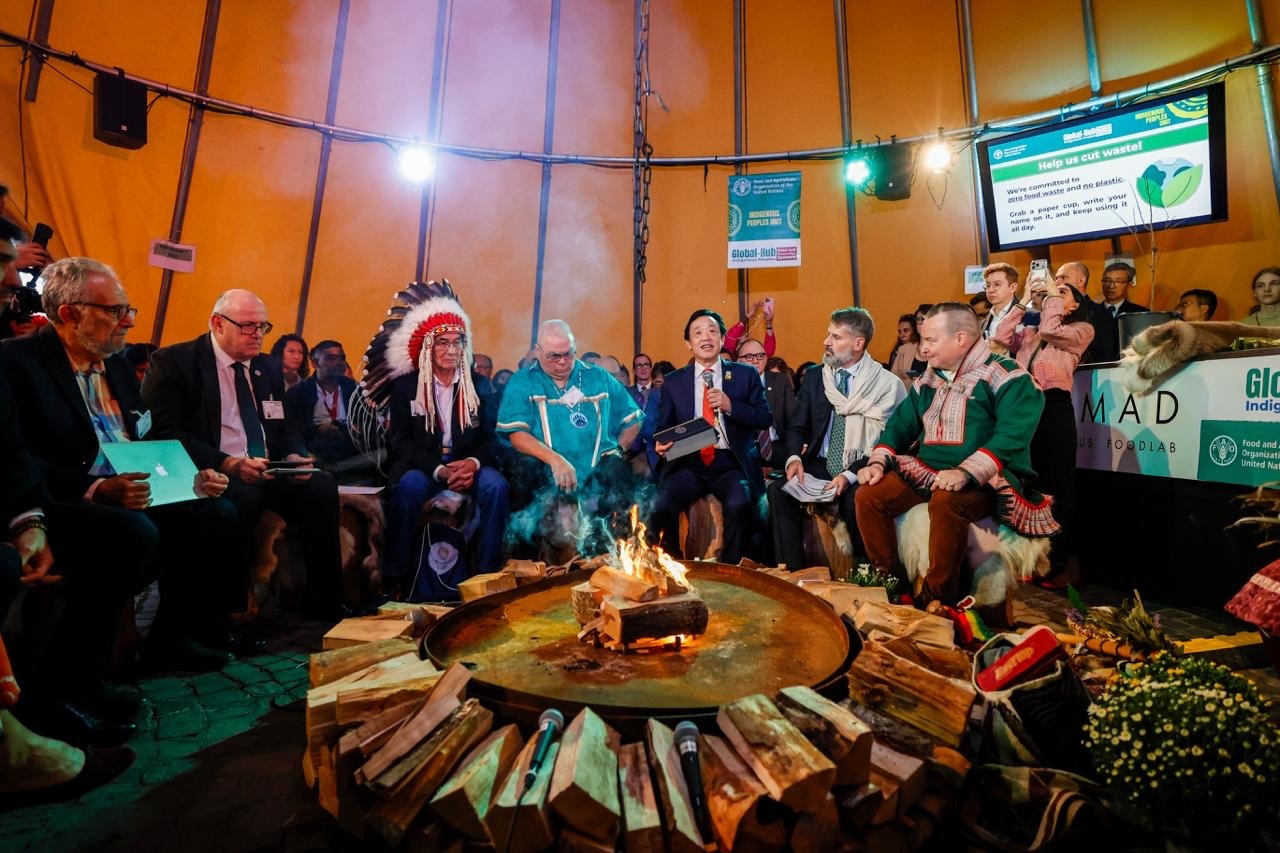
Indigenous knowledge and science are the focus of a week-long gathering at the Food and Agriculture Organization of the United Nations (FAO) in Rome, bringing food-security policy into discussions on research and rural transformation. According to FAO Newsroom, the fourth annual Global-Hub meeting on Indigenous Peoples’ Food and Knowledge Systems has drawn Indigenous and non-Indigenous participants from all seven of the world’s sociocultural regions.
The gathering coincides with World Food Day and the World Food Forum. Two Sámi nomadic tents, known as Lavvus, host the event at FAO headquarters, where an area has been established as an Indigenous Peoples’ territory. Knowledge holders, leaders, specialists and researchers are meeting to share experience and develop knowledge jointly, with the aim of strengthening Indigenous contributions to responses to global challenges.
FAO Newsroom says the Global-Hub, established in 2018, now links 40 organisations and institutions, five international research networks and more than 250 experts. Its work brings different cultures’ knowledge together to support evidence-based policy discussions, recognising Indigenous Peoples as partners in achieving food security. At the opening, FAO Director-General QU Dongyu stressed the transmission of knowledge between generations and encouraged continued learning and collaboration with Indigenous communities.
The meeting’s policy work builds on the White/Wiphala Paper, published in 2021, which examines lessons from Indigenous food and knowledge systems. FAO says the 2026 expert meeting will formally launch the White/Te Oranga Paper on Indigenous Peoples and overcoming non-inclusive rural transformation, intended to expand the evidence available for Indigenous Peoples-led policymaking.
Daily sessions cover science and innovation, vulnerability and prosperity, biocentric restoration and conservation, mobility and nutrition. Other exchanges address climate change, the rights of nature and Indigenous Peoples’ roles as rights and knowledge holders. Opening participants included Ecuador’s Vice President María José Pinto and ministers from Bolivia and Nepal, alongside Indigenous leaders. The programme also includes evening discussions between Indigenous leaders and country representatives, with five Indigenous chefs preparing dinners accompanied by music and cultural presentations.